When Should You Send Save the Dates? A Complete Timeline
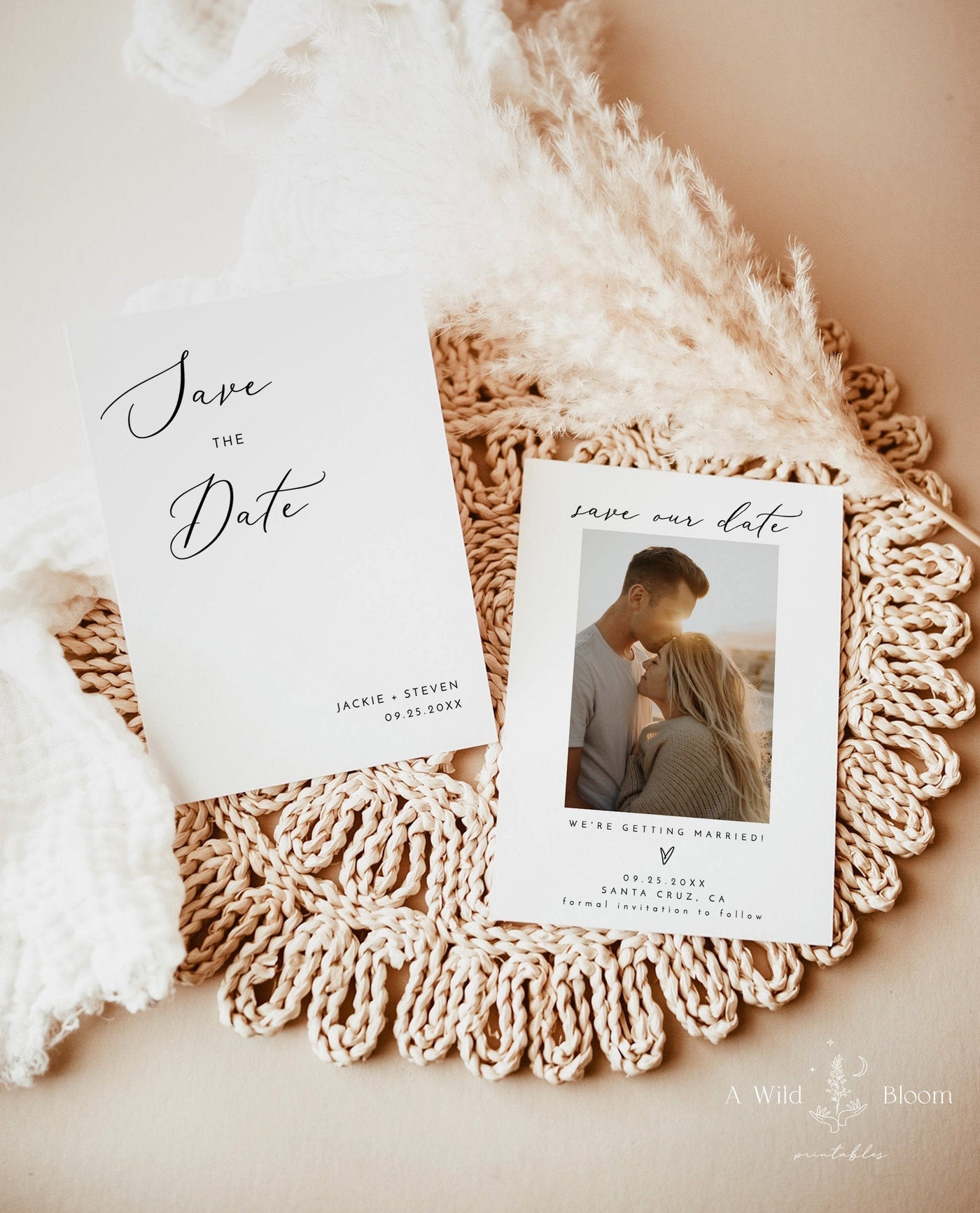
Let's be real: the save the date is the one piece of wedding stationery people actually act on. Nobody clears their calendar because they saw a pretty invitation six weeks out. They clear it because a little card showed up on the fridge eight months early and said "we're doing this, block the weekend." That's the whole job. And because it's the first thing your guests hear officially, the timing matters more than almost any other decision you'll make about paper.
So if you're sitting there googling when to send save the dates at 11pm because someone in the comments of a wedding forum made you panic — take a breath. There's a standard rule, it's easy to follow, and even if you're behind, you have more options than you think. This is the complete timeline: how far out to send, why it matters, who actually gets one, what the full stationery schedule looks like, and what to do if your wedding is four months away and you just realized you haven't ordered anything.
I've been making save the dates, invitations, and wedding signs and decor for couples since 2017, and the questions are almost always the same. Let's answer all of them.

The Short Answer: 6–8 Months for Local, 8–12 for Destination
Here's the rule you came for, with no fluff.
- Local or in-state wedding: send save the dates 6 to 8 months before the wedding.
- Destination or out-of-state wedding: send save the dates 8 to 12 months before — earlier is better.
- Holiday-weekend wedding (Memorial Day, July 4th, Labor Day, NYE): add 1 to 2 months to whichever bracket you're in. So local-on-a-holiday-weekend = 8 to 9 months out.
- Peak-season summer or fall wedding: lean toward the later end of your range. Everyone's calendar fills up fast between May and October.
That's it. If you remember nothing else from this post, remember "6–8 local, 8–12 destination." Everything below is just the why, the who, and the what-if.
And one quick myth to kill right now: you do not have to send save the dates at all. They're a courtesy, not a requirement. If your wedding is small, local, and your guest list is people who'd never miss it anyway, you can skip straight to the invitations. We'll get into who actually needs one a little further down.
Why the Timing Actually Matters (It's Not Just Etiquette)
People treat the save-the-date timeline like a rule handed down by some wedding council. It's not. The timing is functional — it's about giving your guests enough runway to do real-world things. Here's what that 6-to-8-month window is actually buying them:
- Time off work. A lot of jobs require PTO requests weeks or months in advance, especially around holidays and summer. Your guests can't request a Friday off if they don't know about it yet.
- Travel and lodging. Flights are cheaper booked early. Hotel blocks fill up. If guests are coming from out of town, every extra month helps their wallet.
- Childcare and pet care. The people you most want there — close friends with kids — need the most lead time to arrange a sitter for a whole weekend.
- Other weddings. During peak season, your guests might be juggling three or four weddings. The first save the date in the mail tends to win the date.
That last one is the quiet reason timing matters so much. If two couples want the same beloved guest on overlapping weekends, the one who sent first usually gets them. Sending early isn't about being fancy — it's about planting your flag before someone else does.
It also genuinely lowers your stress. When guests have known the date for half a year, your RSVPs come back cleaner and your final headcount is more reliable. That headcount drives your catering, your seating, and how many printed signs and welcome boards you'll need. Early save the dates make everything downstream easier.
The Full Wedding Stationery Timeline (Save the Date → Invitation → RSVP)
The save the date doesn't live alone. It's the first beat in a three-part rhythm, and the pieces have to be spaced correctly or the whole thing wobbles. Here's the full sequence, working backward from the wedding day.
Save the Dates: 6–8 Months Out (8–12 Destination)
First contact. The save the date gives the who-and-when: your names, the date, and the city or region. That's all it needs. No venue address, no registry, no dress code, no RSVP — that's the invitation's job, not this one. Keep it simple and get it in the mail.
If you want help with the actual words — including how to handle "formal invitation to follow" and what to leave off — we wrote a whole guide on wording for every style that applies to save the dates too, and we'll cover the essentials below.
Invitations: 6–8 Weeks Out (3 Months for Destination)
The invitation is the formal ask, and it carries all the logistics: full date and time, venue and address, dress code, RSVP method, and a link or insert for hotel and registry info. Send invitations 6 to 8 weeks before a local wedding, or about 3 months before a destination one so travelers can lock in flights.
You can do these as an editable digital template you personalize in Templett and print yourself, or as printed and shipped invitations we handle for you. More on choosing between those two later.
The RSVP Deadline: 3–4 Weeks Before the Wedding
Set your RSVP deadline for 3 to 4 weeks before the wedding. That gives you a buffer to chase down the inevitable non-responders (there are always a few), hand a final headcount to your caterer, and finish your seating chart. Print the deadline clearly on the invitation and the RSVP card — "kindly reply by [date]" — because a vague request gets vague results.

A Clean Way to Picture It
Here's the whole timeline at a glance for a typical 9–12 month local engagement:
- ~8 months out: Save the dates go in the mail.
- ~7 weeks out: Invitations go in the mail.
- ~3–4 weeks out: RSVP deadline.
- ~2 weeks out: Final headcount to caterer, finalize seating and welcome signs and posters.
Notice the big gap between save the dates and invitations. That gap is normal and correct. Guests don't expect the invitation right after the save the date — the save the date is the heads-up, the invitation is the real thing. Months apart is exactly how it's supposed to feel.
Who Actually Gets a Save the Date (and the One Rule That Matters Most)
This is where couples get tripped up, so let's make it simple. There is one rule that governs everything about your save-the-date list, and it's non-negotiable:
If someone gets a save the date, they get an invitation. Full stop.
A save the date is a promise. You cannot send one and then not invite that person — that's the wedding-etiquette equivalent of standing someone up. So before a single card goes out, your guest list needs to be locked enough that you're sure about everyone on it. Which leads to the practical version of the rule:
- Only send to people you are 100% inviting. No "maybes." No "we'll see if we have room." If they're a maybe, leave them off the save the date and invite them later only if space opens up.
- One card per household. You don't send individual save the dates to a married couple or a family. One card to the household covers everyone at that address.
- Send to your must-haves first. Out-of-town guests, your wedding party, immediate family, and anyone you'd be genuinely sad to celebrate without — these people get a save the date no matter what.
Building Your List Before You Order
Because of the "they're invited" rule, the save-the-date stage forces you to nail down your guest list earlier than you might expect. That's actually a gift — it gets the hardest decision out of the way first. A few things to settle before you order:
- The plus-one policy. Decide who gets a plus-one and address the save the date accordingly ("Sarah Chen & Guest").
- The kids question. If it's an adults-only wedding, the save the date is a fine place to start signaling that by addressing it to the adults only.
- The B-list. It's okay to have one. Just keep B-list folks off the save the dates entirely and invite them with a slightly earlier RSVP deadline if room opens up.
If wrangling the guest list and all the signage feels like a lot, our complete wedding sign checklist walks through every sign you'll eventually need — it's a good companion once the headcount settles.

What to Put on a Save the Date (Keep It to the Essentials)
A save the date is the minimalist of the stationery world. Its entire job is to communicate four things, and adding more just clutters it. Include:
- Your names. First names are fine; full names if you're feeling formal.
- The date. The full date — and if you only have a city locked but not the exact date yet, "Summer 2027" with the city works in a pinch.
- The location. City and state, or just the region. You do not need the venue name or address yet.
- "Formal invitation to follow." This little line tells guests the real details are coming and they don't need to do anything yet but hold the date.
That's the whole card. Things to deliberately leave OFF: the ceremony time, the venue address, the dress code, the registry, and your RSVP info. All of that belongs on the invitation. Putting registry info on a save the date in particular reads as a little grabby — save it for the wedding website or a details insert later.
If you want a wedding-website URL on there, that's the one acceptable "extra." A short, clean URL lets curious guests start poking around for travel info early, which is genuinely helpful for destination and holiday-weekend weddings.
Holiday Weekends and Long-Weekend Weddings: Send Even Earlier
Holiday-weekend weddings are wonderful — built-in extra days off, a festive mood, often gorgeous weather. They also come with a catch: everyone else also wants those weekends. Memorial Day, July 4th, Labor Day, Thanksgiving, and New Year's Eve are prime travel and gathering windows, which means your guests are competing with family trips, other weddings, and standing traditions.
The fix is simple — send earlier. For any holiday-weekend wedding, push your save the dates to 8 to 9 months out for local and a full 10 to 12 months for destination. Here's why the extra lead time pays off:
- Flights and hotels spike around holidays. The earlier guests book, the less it costs them, and the more likely they'll actually come.
- People have standing holiday plans. Aunt Diane has hosted Thanksgiving for fifteen years. Give her time to reroute.
- PTO is harder to get around holidays. Lots of coworkers are competing for the same days off.
It's also kind to acknowledge the holiday directly. A note like "join us for a Fourth of July weekend wedding" on the save the date or wedding website sets expectations and gets people excited rather than torn.
Destination Weddings: Give People a Real Runway
If your wedding requires a plane, the timeline stretches and the stakes go up. Destination guests aren't just clearing a Saturday — they're committing to flights, multiple hotel nights, time off, and often a real chunk of money. They deserve the longest possible heads-up.
For destination weddings, send save the dates 8 to 12 months out, and don't be shy about the full 12 if it's international or during peak season. A few destination-specific moves:
- Get your wedding website live before the save the dates ship. Travelers will want flight info, hotel blocks, and a rough weekend itinerary the moment they hear. Put the URL right on the card.
- Hint at the schedule. If there's a welcome dinner Friday and a farewell brunch Sunday, signal that it's a weekend affair so guests book the right travel days.
- Consider a hotel block deadline. If you've negotiated a room block, mention when it expires so guests don't dawdle.
Destination guests who say yes are making a big commitment — the long runway is how you make that commitment feel doable instead of overwhelming.

Digital vs. Printed Save the Dates: Which Should You Send?
You've got two real paths here, and neither is wrong. The right one depends on your budget, your timeline, and how your particular crowd communicates. Let's break down both honestly.
Printed & Shipped Save the Dates
The classic. A physical card that lands in the mailbox and ends up on the fridge, where it quietly reminds people of your date every single day for months. That fridge-magnet permanence is the real superpower of print — a card you can touch doesn't get buried under unread email.
Printed save the dates are the move when:
- Your guest list skews older or less email-driven (grandparents, family friends).
- You want the tactile, keepsake feel — many guests genuinely save these.
- You're including a photo and want it to look gorgeous on real cardstock.
The tradeoff is lead time and cost: you're paying for printing, envelopes, and postage, and you need to order early enough to account for production and mailing. With Wild Bloom you can have us personalize and ship printed pieces for you, or order an editable template and print locally.
Digital Save the Dates
An emailed or texted card, or one shared through your wedding website. Faster, cheaper, instantly trackable (you can see who opened it), and zero postage. They've gotten genuinely beautiful — a well-designed digital save the date doesn't read as cheap anymore.
Digital save the dates are the move when:
- You're short on time and need to get the date out now.
- Your budget is tight and you'd rather put the print money toward invitations and day-of signage.
- Your crowd lives on their phones and you have reliable emails for everyone.
The catch: emails get lost, spam-filtered, or ignored, and some older relatives genuinely won't see them. If you go digital, follow up to confirm the important people actually got it.
The Honest Take: You Can Mix Them
Plenty of couples do a hybrid — printed cards for the relatives and out-of-town must-haves, digital for the friend group that lives in the group chat. There's no rule against it. If you're weighing the broader print-vs-digital decision for your whole suite, we wrote a full breakdown on editable templates vs. printed & shipped that's worth a read before you commit.
Help, I'm Behind: Short Engagements and Late Starts
First things first: you are not behind, and this is normal. Short engagements happen constantly — for budget reasons, life timing, a venue that opened up, or just because you wanted to. The standard timeline assumes a tidy 12-month runway, and plenty of real weddings don't get one. You can absolutely pull this off.
Here's how to handle it depending on how much time you've actually got.
If You Have 4–6 Months
- Send save the dates immediately — the same week if you can. Go digital to save time; speed beats paper here.
- Then send invitations 6 weeks out as planned. The compressed gap between the two is fine.
- For out-of-town guests, consider a quick personal text or call on top of the save the date so they can grab flights fast.
If You Have Under 3 Months
- Skip the save the dates entirely. Seriously — at this range they'd arrive almost on top of the invitation, which is just confusing. Go straight to the invitation.
- Send invitations as soon as they're ready, ideally 4 to 6 weeks out at minimum.
- Set a tight RSVP deadline, about 2 weeks before the wedding, and plan to chase responses by phone.
- Give your must-haves a personal heads-up now — a text or call — so the people who matter most can clear their calendars before the formal invite even arrives.
The Shortcut Everyone Forgets
When you're tight on time, an editable digital template is your best friend. You personalize it in Templett in an afternoon, export it, and send it by email or text the same day — no printing, no shipping, no waiting. It's the fastest way to get the date into people's hands when the clock is the problem. Then you can take a breath and order proper printed invitations for the formal ask.

The Month-by-Month Save the Date Countdown
Let's put it all together. Here's the full countdown for a standard local wedding with a comfortable runway. Adjust earlier if you're destination or holiday-weekend.
10–12 Months Out: Lock the Foundation
- Confirm your wedding date and book the venue (you can't save a date you don't have).
- Start your guest list — this is the gating item for save the dates.
- Begin browsing save the date designs so you know what you want when it's time to order.
8 Months Out: Order and Send (Local)
- Finalize the guest list — remember, anyone on it is getting an invitation.
- Order your save the dates (or buy and personalize a template).
- Collect mailing addresses. A shared spreadsheet or a quick group-text request works great.
- Mail them. This is the milestone. For destination or holiday weddings, you'd have done this 1–4 months earlier.
6 Months Out: Build the Website and the Suite
- Get your wedding website fully live with travel and hotel info.
- Choose your invitation design so it coordinates with your save the date.
- Start thinking about day-of signs and decor — welcome signs, seating charts, bar menus — so you're not scrambling in the final weeks.
3 Months Out: Order Invitations
- Order your invitations and any inserts (RSVP cards, details cards, maps).
- Finalize your dress code and RSVP method so they're ready to print on the invite.
- Order printed welcome signs and posters if you're going the printed-and-shipped route, to leave room for production.
6–8 Weeks Out: Mail Invitations
- Address and mail your invitations.
- Double-check the RSVP deadline printed on them is 3–4 weeks before the wedding.
- Confirm your printed wedding signs are ordered or in production.
3–4 Weeks Out: RSVP Deadline
- Collect RSVPs and start chasing the stragglers (there are always stragglers — it's not personal).
- Build your seating chart as numbers firm up.
- Order thank-you cards now so they're ready to write right after the honeymoon.
1–2 Weeks Out: Final Headcount
- Give your final headcount to the caterer and venue.
- Finalize seating chart and escort cards.
- Confirm all signage — welcome sign, seating chart, bar menu, and the little detail signs — has arrived. Our wedding sign checklist is the gut-check here so nothing gets forgotten.
Common Save the Date Mistakes (and Easy Fixes)
A few slip-ups come up again and again. None are fatal, and all are avoidable.
- Sending to "maybes." Once it's mailed, that person is invited. Only send to confirmed yeses on your list.
- Putting too much info on the card. No venue address, no registry, no RSVP. Save those for the invitation.
- Forgetting "formal invitation to follow." Without it, some guests think the save the date is the invite and wait for details that already came.
- Sending too late for destination or holiday weekends. When in doubt, send earlier. Nobody's ever annoyed by too much notice.
- Skipping the wedding website URL. Even a barebones site gives curious early guests somewhere to look, especially for travel.
- Not collecting addresses early. The address hunt is what actually delays most save the dates. Start it before you order, not after.

How Save the Dates Fit Into the Bigger Picture
Your save the date is the opening note of a much longer song. It sets the tone for everything that follows — your invitations, your wedding website, and eventually all the signs and decor guests will see the day of. When the whole suite coordinates, your wedding feels intentional without anyone consciously noticing why.
That's why it's worth picking a save-the-date design you can carry through. If your save the date is soft and floral, your invitations and your welcome sign can echo it. If it's clean and modern, the same. You're not just sending a date — you're introducing the visual world of your wedding, eight months before anyone walks in.
And if you're a planner who likes the whole map laid out, pair this post with our welcome sign wording guide and the complete wedding sign checklist. Between the three, you'll have the timing, the words, and the full list of what to make — start to finish.
Quick Recap: Your Save the Date Cheat Sheet
Pin this somewhere. Here's everything you actually need to remember about when to send save the dates:
- Send: 6–8 months out (8–12 for destination); add 1–2 months for holiday weekends.
- Then invitations 6–8 weeks out (3 months for destination), with an RSVP deadline 3–4 weeks before the day.
- The golden rule: if they get a save the date, they get an invitation.
- Behind schedule? Go digital, or skip straight to invitations if you're under 3 months. You're not behind — you're adapting.
Ready When You Are
Whenever you're ready to actually make the thing, we've got you. Wild Bloom has save the dates in both flavors — editable digital templates you personalize in Templett and send the same afternoon, and printed and shipped cards we personalize and mail to you. When you're ready for the next steps, we've also got coordinating invitations, wedding signs and decor, and thank-you cards to round out the whole suite.
Take a breath. Lock your date, lock your list, and get those cards in the mail. The hardest part is just hitting send — everything after that is downhill.